
Interview of the Ambassador Extraordinary and Plenipotentiary of Ukraine to the State of Israel Mr. Hennadii Nadolenko
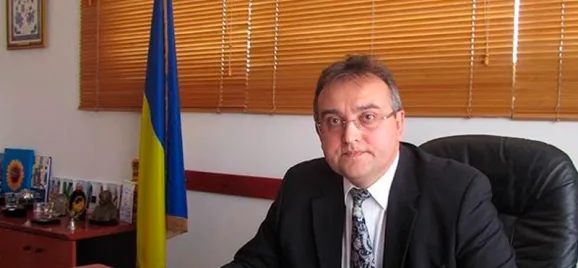
Interview with Ambassador Extraordinary and Plenipotentiary of Ukraine to the State of Israel Gennady Oleksiyovych Nadolenko for the Israel-Ukraine Chamber of Commerce and Industry
Ukrainian-Israeli relations during the COVID-19 pandemic
—
Gennady Oleksiyovych, please tell us about the work of the Ukrainian Embassy in the State of Israel during the first days of the quarantine in Israel. How many requests did the Embassy receive during these days?
To ensure effective assistance to Ukrainian citizens amid the threat of COVID-19, the Ministry of Foreign Affairs of Ukraine has decided to transfer Ukraine's diplomatic missions abroad to a special regime, which includes remote processing of citizen inquiries and enhanced request processing. This special regime includes temporary protective measures for diplomatic service employees and a transition to online and remote work wherever possible. Therefore, the Embassy of Ukraine in Israel, and in particular the consular section of the diplomatic mission, continued to operate at maximum mobilization.
During the first days of the quarantine, the Embassy's consular section handled approximately 100 phone calls and approximately 50 email inquiries daily. Now, we receive approximately 40 calls and approximately 20 written inquiries.
How did the Embassy manage to remain effective in such extraordinary circumstances?
First and foremost, this is a credit to the staff of the consular department, their readiness to promptly respond to challenges facing Ukrainian citizens amid the pandemic, border closures, and disrupted air travel. Their ability to understand and, to the best of their ability, address each situation our compatriots have found themselves in these days.
According to your data, how many Ukrainians have left Israel since the quarantine measures were introduced?
As of today, according to the Embassy, more than 500 people have departed Israel on evacuation flights to Ukraine, and approximately 100 citizens have left Israel on Belavia flights via Minsk.
Are there any cases of infection among Ukrainian citizens located in Israel?
The Embassy has no information about Ukrainian citizens infected with coronavirus, but we do not rule out the possibility that such cases may occur among Ukrainian citizens who have received Israeli citizenship and are considered Israeli citizens by the competent Israeli authorities.
There are likely many Ukrainian citizens who, for one reason or another, have remained in Israel unplanned. How does the Embassy support these people?
The main areas of assistance to Ukrainian citizens were identified by Ukrainian Foreign Minister Dmytro Kuleba in the "Protection" program. Specifically, the Embassy provides assistance in resolving issues with expired documents/permits/visas for staying in the country; informs about the possibility of returning to Ukraine, for example, through neighboring countries; ensures the prompt processing of travel documents; provides information on various issues; and, where possible, resolves everyday issues; and, in certain cases, provides transportation for Ukrainian citizens to the airport.
How is the Embassy currently operating, and when do you plan to resume your normal, pre-quarantine operations?
We are currently continuing to work remotely. Decisions regarding our future operations will, of course, be made as quarantine restrictions are eased and the COVID-19 situation evolves.
Ukrainian-Israeli relations. How do you predict the COVID-19 situation, border closures, and quarantine measures will impact relations between our two countries? Which areas will suffer, and which, on the contrary, will benefit?
Ukraine and Israel maintain friendly relations and a mutually beneficial partnership; our countries enjoy an existing level of mutual understanding and trust. Comprehensive cooperation with Israel is one of the key vectors of Ukraine's foreign policy. Israel remains our key trading partner in the Middle East. According to statistics, in 2019, trade in goods and services between Ukraine and Israel amounted to $1.116 billion.
Ukraine is extremely interested in stable trade and economic relations with the State of Israel. Unfortunately, COVID-19 will undoubtedly have a very negative impact on these relations, with tourism and air travel being the first to suffer.
Given the global nature of the economic and humanitarian crisis caused by the pandemic, this area of our cooperation is extremely important to support life in both countries.
By working together, we must preserve at least some of the results we have achieved recently and minimize the negative impact on our economy.
I would like to emphasize that, under these extraordinary circumstances, Ukraine does not plan to impose restrictive measures on trade with Israel and will strive to ensure the flow of goods and services between our countries to the greatest extent possible. We will strongly encourage our entrepreneurs to continue to cooperate with their Israeli partners. I look forward to a similar approach from our Israeli friends.
In this context, I welcome the decision of the Israeli Ministry of Agriculture to finally lift the ban on the import of Ukrainian table eggs.
I am very pleased that Ukraine was able to help Israel resolve the acute shortage of table eggs ahead of Easter.
We understand that the fight against the coronavirus pandemic will take a long time and will have a significant impact on global trade. As I understand, Israeli government agencies are currently seeking alternative sources of supply for imports, which have been reduced due to the epidemiological situation, primarily from China and Southeast Asia. Therefore, Ukraine is ready to become a supplier to Israel of goods and services traditionally sourced from other regions of the world.
What are the embassy's priorities for developing bilateral relations in 2020-2021, taking into account the new reality we are facing due to COVID-19?
The new reality brought about by the pandemic has introduced a number of unknown factors into the Embassy's plans regarding future tasks and priorities.
In these circumstances, our main goal is the entry into force of the bilateral Free Trade Agreement (in goods), signed on January 21, 2019.
The entry into force of this Agreement will help us counter the decline in trade turnover between our countries, as well as diversify it and facilitate the entry of companies from both countries into each other's markets.
We expect Israel to complete all internal procedures for the Free Trade Agreement to enter into force. I hope its ratification will be on the agenda of the Israeli government, whose appointment we expect soon.
We in Ukraine are convinced that the implementation of the bilateral free trade agreement will increase Israeli investment in the Ukrainian economy and expand our cooperation in the field of information technology and innovative technologies.
In today's harsh realities, maximizing the investment and innovation potential of our countries should become an important stage of economic cooperation.
I believe that developing cooperation in the field of high technology is the most promising area of bilateral economic cooperation, and the embassy will support all initiatives in this direction.
Addressing current challenges also requires a transition to new forms and methods, so it's crucial to urgently implement the agreements reached by our leaders (during Mr. Netanyahu's visit to Ukraine last August) to establish an office for innovation, development, and investment in Kyiv and Jerusalem. Therefore, at our embassy, we also consider this goal a priority.
Is there any cooperation between the two countries at the state level in terms of combating the pandemic?
The pandemic has certainly impacted the quantity and quality of international exchanges. Bilateral Ukrainian-Israeli relations are no exception. We had numerous events planned at various levels for this year. As a result of the pandemic, the leadership of Ukraine and Israel has been forced to focus on domestic agendas. Both resources and political will are now subordinated to this issue.
Communication remains primarily through the embassies of Ukraine and Israel; it's just changed its format. We use platforms based on modern technologies for this.
To combat the COVID-19 pandemic, the Government of Ukraine has instituted ongoing monitoring and analysis of the latest scientific developments and best global practices in the fight against coronavirus (diagnosis, treatment, prevention, etc.). In particular, we are closely monitoring the measures taken by the Israeli government to combat the pandemic and are interested in close cooperation both in this area and in the healthcare sector in general.
We have appealed to the Government of Israel to provide any humanitarian aid we can (COVID-19 tests, ventilators, personal protective equipment, etc.) and confirmed the Ukrainian Government's readiness to join efforts to overcome COVID-19.
Given the ongoing reform of the healthcare system in Ukraine, as well as Israel's significant professional and technological potential, we believe developing cooperation with Israel in this area is promising. This is currently one of our priority areas of work.
How do you assess the economic consequences of the pandemic for Ukraine?
The Cabinet of Ministers of Ukraine expects the peak of COVID-19 cases to occur in early May. After this peak, the Ukrainian government will begin implementing anti-crisis measures to support the economy. Under these circumstances, forecasts are currently meaningless.
In our work, we focus on analyzing the economic situation in Israel and the consequences of the pandemic for bilateral trade.
The IMF estimates that Israel's economic activity will contract by 6.31% by the end of the year. Even after the lockdown is lifted and economic activity resumes, the unemployment rate will reach 121% by the end of the year, three times higher than before the crisis.
Contraction of economic activity and high unemployment will lead to deflation and lower prices by 2%.
Access of domestic foreign economic entities to the Israeli market is not yet restricted.
—
We thank Mr. Ambassador Extraordinary and Plenipotentiary of Ukraine to the State of Israel Mr. Hennadii Nadolenko for the opportunity to talk and get answers to burning questions regarding bilateral relations between Ukraine and Israel.
You may also like

Solrom Holdings Ltd.: Interview
Vlad Cherkassky, CEO of the Chamber of CCI Israel-Ukraine, spoke with Matan Rabin, CEO of Solrom Holdings Ltd., which has recently joined the Chamber as a member.

Israel-Ukraine Chamber of Commerce and Industry at the Mlieko & Med ’25 Forum in Bratislava
On May 24, 2025, the Israel-Ukraine Chamber of Commerce and Industry took part in the Mlieko & Med '25 forum.
Become a Chamber member
Join a business community that opens new opportunities for partnership, growth, and cooperation between Israel and Ukraine.